
Word Screw: 3D Screw Puzzle
Astrasen GlobalPuzzle
4.8442.00 Reviews
- Version
- 1.311
- Installs
- 1.00M
- Age Rating
- Everyone
Screenshots
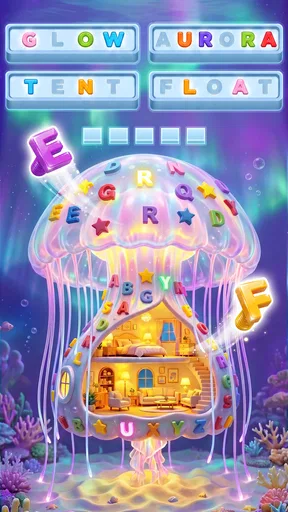
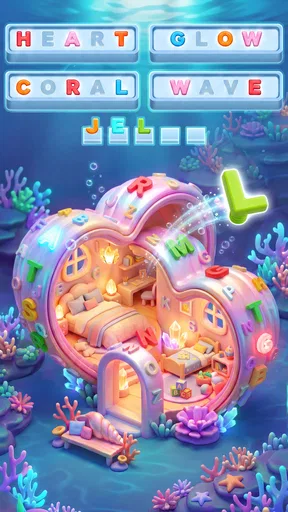
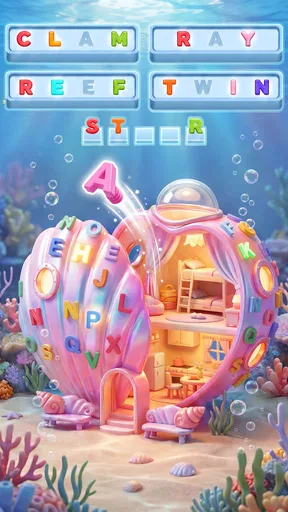
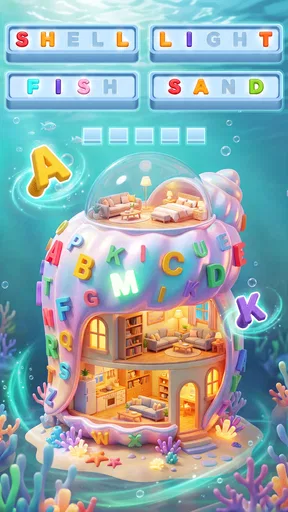
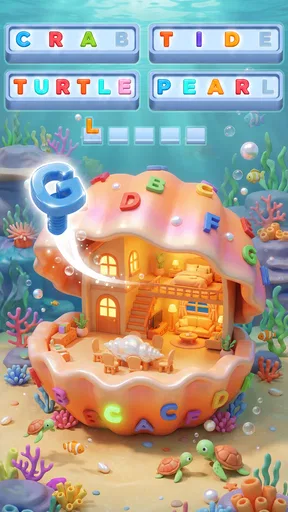
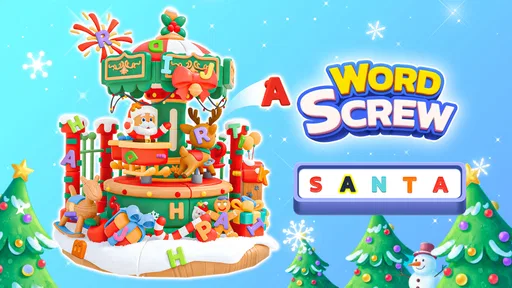
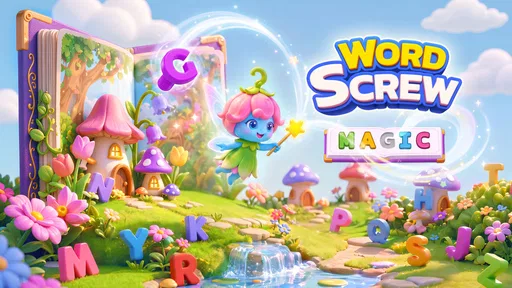
Our Review of Word Screw: 3D Screw Puzzle
 Analysis by Appyee
I went into Word Screw: 3D Screw Puzzle expecting a simple word game with a mechanical theme, and that is more or less what it delivers: a calm puzzle experience built around arranging letters while dealing with the visual idea of screws and jammed pieces. Its appeal is not explosive variety or a deep story. The attraction is the small satisfaction of spotting the right word-related move, clearing a troublesome arrangement, and moving on without feeling rushed.
After spending time with it, my main impression is that this is best understood as a casual word puzzle for short sessions rather than a demanding brain-training substitute. The free entry point makes it easy to try, and the Everyone age rating gives it a broad audience. At the same time, players who want a large vocabulary challenge, competitive scoring, or a clearly escalating strategy system may find the experience too gentle.
How the letter-and-screw idea works in practice
The central concept combines two familiar puzzle pleasures. One is the search for useful letter combinations; the other is the tactile fantasy of loosening something that is stuck. That combination gives the game a more physical identity than a standard word grid. Instead of feeling like I am simply tapping answers from a list, I am encouraged to think about order, obstruction, and the consequences of making a move too early.
That distinction matters because the word element alone would not be enough to make this stand out. The screw-jam presentation supplies the extra layer of context. Even when the underlying decision is straightforward, the board feels like a small object that needs to be taken apart carefully. I found that especially pleasant when I wanted something interactive but not mentally exhausting.
The developer, Astrasen Global, has positioned the game as a free puzzle rather than a premium one-time purchase. That makes the first decision simple: install it, play a few rounds, and decide whether the rhythm suits you. The current release is version 1.311, and the game runs on devices using Android 6.0 or later. Those details make it accessible to people who are not using a recent phone, although the exact feel will still depend on the device and screen size.
The store summary focuses on relaxing with a word-jam screw puzzle, and that description matches my experience better than calling it an intense logic challenge. The atmosphere is more about steady progress than pressure. I can imagine opening it while waiting for an appointment, taking a short break between tasks, or playing a few boards before bed without needing to remember a complicated plot or a long chain of objectives.
Why the presentation helps the puzzle
The 3D framing gives the letters a sense of placement. In a flat word game, a mistake can feel abstract: I selected the wrong tile, and the board changes. Here, the visual language suggests that pieces are connected or blocked, so planning feels more natural. I pay attention not only to which letters might form a word, but also to which action seems likely to free the next useful part of the arrangement.
That is a small but meaningful strength. The theme does not completely transform the word-puzzle formula, yet it gives ordinary choices a physical reason. When I pause before tapping, I am not merely searching for vocabulary; I am considering whether I am opening the board in a sensible order. That makes the early stages more engaging than a bare sequence of anagrams.
Another advantage is the low barrier to understanding. A player who already enjoys word games can recognize the goal quickly, while someone who is less comfortable with traditional crossword clues is not immediately faced with a dense page of instructions. The game communicates through its board and actions. For family play, that simplicity is useful, especially when different players have different levels of puzzle experience.
Still, simplicity is both the charm and the boundary. The game does not seem designed to reward a specialist vocabulary or a long-term competitive mindset. Its best moments come from manageable decisions and clean little breakthroughs. If I am looking for the pressure of a timed word duel, a daily streak culture, or a carefully balanced tournament ladder, I would choose another kind of app.
Small-session use is where it makes the most sense
My favorite way to use it is in deliberately short bursts. Rather than treating it as the only game on my phone, I would keep it as a low-commitment option for moments when I want to occupy my hands and give my attention a gentle target. The screw-and-letter format is suitable for that because each puzzle feels like a contained task. I can stop after a successful board instead of being pulled into a long narrative sequence.
A realistic example would be a commute with a few spare minutes. I could open the game, work through a board, and put the phone away when I reach my stop. The same pattern works during a coffee break: it offers more involvement than scrolling, but it does not demand the concentration required by a complex strategy title. That makes it a useful choice for people who want a puzzle that fits around daily life rather than taking over it.
There is also a practical way to approach difficult boards. I would first look for the letters that appear to be most constrained, then consider whether removing them opens several possible word paths. In other words, I would avoid grabbing the first recognizable combination simply because it is available. The physical-jam theme rewards thinking about access, and this habit can prevent a promising board from becoming unnecessarily tangled.
A second useful habit is to separate recognition from action. I may see a possible word quickly, but that does not always mean it is the best first move. I found it more reliable to scan the surrounding arrangement, identify what could become accessible afterward, and only then commit. This is the kind of small tactical adjustment that a generic word-game description would not tell a new player, yet it makes the experience feel less random.
For players who struggle with a board, I would also recommend taking a brief pause instead of tapping repeatedly. The relaxed pace is an invitation to inspect the arrangement. Rapid guesses can turn a simple puzzle into a frustrating sequence of corrections, while a slower look often reveals a better order. That approach is particularly helpful for younger players or anyone who enjoys puzzles but dislikes penalty-heavy systems.
What the rating and audience suggest
The game holds an average rating of 4.8 from around 20 thousand ratings, with hundreds of written reviews and over a million installs. Those figures indicate that the basic formula has found a substantial audience, but I would not treat popularity as proof that every player will enjoy it. The important question is whether the player wants relaxing word manipulation with a visual mechanical hook.
The Everyone age classification is appropriate for the tone I encountered. Nothing about the concept requires mature subject matter, and the straightforward controls make it approachable. I would be comfortable suggesting it to casual players, families looking for a simple shared puzzle, and adults who prefer quiet mobile games over action-heavy releases.
That recommendation comes with a qualification for parents and gift-givers: free installation does not automatically mean a completely cost-free experience. The game includes in-app purchases ranging from $0.99 to $99.99 per item. I would check the device's purchase controls before handing it to a child, particularly if the phone or tablet is shared. This is not a criticism unique to this title, but it is an important part of deciding whether its free model fits a household.
For me, the purchase range changes how I would use the game. I would begin without spending anything and judge whether the core loop remains enjoyable on its own. If a player feels pushed toward purchases to maintain interest, that weakens the value of the otherwise accessible entry point. A good casual puzzle should still be worth opening when I simply want one quiet round.
Where it falls short compared with other word puzzles
The most meaningful limitation is depth. The screw-jam theme makes the presentation distinctive, but a theme cannot replace a broad set of puzzle structures. Players who usually enjoy cryptic clues, large crossword grids, competitive word battles, or carefully layered deduction games may eventually want more variety than this format provides.
Compared with a conventional word-search game, this one has a stronger sense of physical interaction and sequencing. Compared with a crossword, it is less dependent on clues, general knowledge, and extended written reasoning. Compared with a match-three puzzle, it asks for more attention to letters and word formation rather than color patterns. Those differences make it easy to place in the category, but they also show who may prefer an alternative.
I would skip it if my main goal were to expand vocabulary in a structured way. The game may make me notice letter relationships and practice recognition, but it is not the same as a language-learning course with definitions, pronunciation, or a planned lesson path. I would also look elsewhere if I wanted a strong social component, head-to-head competition, or a persistent profile built around achievements. The appeal here is personal and immediate, not communal.
There is a second kind of friction: the physical framing can make a simple decision feel more elaborate than it really is. Some players will enjoy that extra layer, while others may see it as decoration around a familiar word mechanic. If I already find 3D puzzle presentations distracting, the screws and jammed arrangement could get in the way rather than adding satisfaction.
The free-to-play structure is another trade-off. Since purchases are available, I would pay attention to how often the game interrupts the natural rhythm of solving. Even without assuming a particular monetization behavior, the presence of a very wide purchase range means cautious players should approach it as a free app with optional spending, not as a traditional paid puzzle bought once and finished without further decisions.
Who will get the most from it
The strongest audience is someone who likes word games but wants a softer, more tactile presentation. This player does not need a story, a leaderboard, or a punishing difficulty curve. They want a board that can be understood quickly, a little mental resistance, and the satisfaction of freeing letters in a sensible order.
It also suits people who alternate between active and passive entertainment. On one day I might want a serious strategy game; on another, I might only have the energy for a few calm puzzles. This title fits the second mood. Its value comes from being easy to pick up without being completely mindless.
Families may appreciate the accessible premise, though I would still supervise spending settings on shared devices. Older phones are not automatically excluded because the minimum operating-system requirement is Android 6.0, but performance and readability can vary across hardware. A larger screen may make the three-dimensional arrangement easier to inspect, while a compact display could make small letter positions less comfortable during longer sessions.
I would recommend trying it to anyone who enjoys untangling systems visually and likes words as much as symbols. I would not make it my first recommendation for a dedicated crossword enthusiast, a competitive word-game player, or someone searching for a robust educational tool. Those users may be happier with apps built specifically around clues, multiplayer matches, or language instruction.
My practical way to decide whether it belongs on your phone
Because the game is free to install, the fairest test is not one quick glance at the opening board. I would play long enough to see whether the basic action remains satisfying after the novelty of the screw theme fades. Ask yourself whether you enjoy planning the order of moves, or whether you are merely waiting for the next obvious word.
I would also notice how the game fits my attention span. If I can finish a short session feeling refreshed, that is a genuine strength. If I feel that I need to continue only because I have already invested time, the format may not be right for me. Casual puzzle games work best when stopping feels natural.
Finally, I would decide in advance whether I want to spend money. Starting with a clear personal limit prevents the free-to-play structure from quietly shaping the experience. For a child, I would use device-level purchase protections; for myself, I would treat any purchase as optional and only consider it if the unpurchased game already feels worthwhile.
My final verdict on Word Screw: 3D Screw Puzzle
Word Screw: 3D Screw Puzzle succeeds because it gives a familiar word-puzzle idea a physical identity. I like the way the screw-jam theme encourages me to think about access and order instead of simply hunting for any available answer. The relaxed format, broad age rating, free entry, and support for older Android versions make it easy to recommend as a casual option.
Its weakness is equally clear: the concept may not provide enough depth for players who expect a large, varied, or competitive word-game experience. The optional purchases also deserve attention, especially on family devices. I would not present it as a replacement for crosswords, language-learning software, or multiplayer word battles.
My recommendation is specific. Try it if you want a visually distinctive puzzle for short breaks, enjoy arranging letters, and prefer steady satisfaction over pressure. Skip it if you need advanced vocabulary work, social competition, or a deep progression system. For the right player, this is a pleasant little game that turns a simple word challenge into a more tangible act of loosening, sorting, and clearing the way.
Verdict
Strengths of Word Screw: 3D Screw Puzzle
- Smooth 3D controls make rotating and inspecting the board intuitive.
- Short levels are convenient for quick play sessions.
- Gradual difficulty introduces mechanics without overwhelming new players.
- Colorful visuals and satisfying screw-removal animations improve feedback.
- Offline play makes it suitable for travel or areas with limited connectivity.
Limitations of Word Screw: 3D Screw Puzzle
- Later puzzles can feel repetitive once the core screw mechanics become familiar.
- Small pieces may be difficult to distinguish on compact phone screens.
- Some levels rely more on trial and error than careful planning.
- Frequent ads may interrupt the flow between completed puzzles.
- Progress and extra moves can encourage optional purchases over time.
Other Releases by Astrasen Global
View All


Similar Picks in This Category
View All
Block Blast!
HungryStudio4.8

Braindom: Brain Games Test
Lahana Game Studio4.6

AMAZE!
CrazyLabs LTD4.6

Sudoku - Classic Sudoku Puzzle
Oakever Games4.7

Art Puzzle - Puzzle Games
Easybrain4.8

Amaze GO!
Oakever Games4.9
Frequently Asked Questions
What is Word Screw: 3D Screw Puzzle, and how does the gameplay work?
Word Screw: 3D Screw Puzzle combines word-solving with three-dimensional screw and bolt mechanics. You usually need to examine a rotating puzzle, remove or rearrange screws, and uncover letters or word-related clues in the correct order. Each level rewards observation, planning, and patience rather than speed. The difficulty gradually increases as puzzles include tighter spaces, blocked pieces, and more complicated arrangements.
Is Word Screw: 3D Screw Puzzle suitable for beginners and casual players?
Yes, the game is designed to be approachable for casual players, even if you have little experience with mechanical or word puzzles. Early stages generally introduce the controls and basic objectives at a comfortable pace. However, later levels can become noticeably more demanding and may require experimenting with different screw-removal sequences. It works well for short sessions, although some puzzles may take longer to solve.
Does Word Screw: 3D Screw Puzzle require an internet connection?
The basic puzzle experience may be playable without a constant internet connection, which makes it convenient for travel or offline breaks. Nevertheless, certain features can depend on connectivity, including advertisements, cloud-related functions, special events, updates, or reward systems. Because requirements may change between versions and devices, it is best to open the game online at least occasionally and check its current in-game notices.
Are there hints, boosters, or other help features when a puzzle becomes difficult?
Word Screw: 3D Screw Puzzle typically provides assistance for players who get stuck, such as hints, undo options, extra moves, or other in-game tools. These features can be useful when a screw is hidden behind another piece or when an incorrect sequence leaves the board difficult to manage. Some assistance may be limited or connected to rewards, advertisements, or optional purchases, so using hints thoughtfully is recommended.
Is Word Screw: 3D Screw Puzzle free to download, and does it contain ads or in-app purchases?
The game is generally offered as a free download, allowing you to try its core levels without paying upfront. Like many free-to-play puzzle games, it may include advertising and optional in-app purchases for coins, hints, boosters, or removing ads. The exact pricing and frequency of advertisements can vary by platform, region, and update. Review the store listing and purchase settings before downloading, especially on shared devices.
Play our best games!


